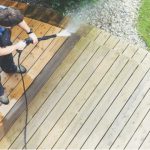
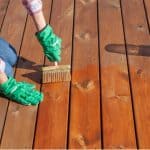
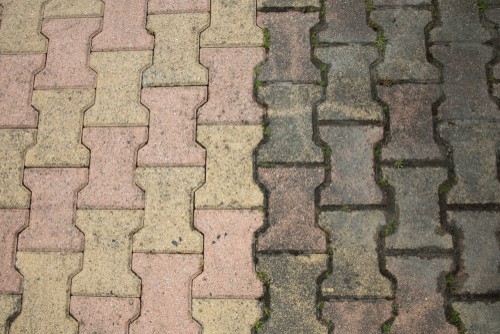
If you have patio slabs and need to keep them clean, you can do so easily with soapy water, bleach, or by using one of our favourite machines, the pressure washer. We’ve included a handful of ways to properly clean so that you can do everything from regular washing to spring cleaning. The difference between a dirty and clean patio will amaze you, the picture below shows just what’s possible.
What you need
Before you begin, make sure you have the right tools. That being said, the right tools depend on how you want to go about cleaning your patio slabs. The basics include a bucket, bristled brush, and warm soapy water.
- If you are doing a basic clean with soapy water, liquid soap is preferable and you can get some very effective detergents.
- If you are doing a bleach clean, add that to the list.
- If you are doing a full, pressure wash clean, then you will need the pressure washer and detergent. – Check out some of the best affordable pressure washers in our review here
Basic Cleaning – Cleaning with warm water and detergent
Step 1 – Remove any weeds beforehand
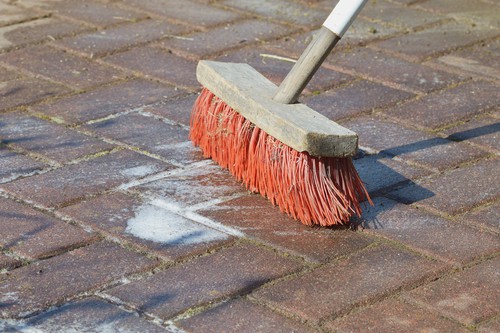
When you clean your patio slabs with detergent and warm water, start by removing any weeds. Every so often, weeds will find their way into the spaces between paving slabs, especially if you haven’t scrubbed the pavers recently. So, remove them as soon as you can so that they don’t have time to establish a root structure.
If there are a lot of established weeds, use a weedkiller.
See our list of the best weedkillers for driveways
Step 2 – Mixing detergent with water
Mix your detergent with a gentle liquid soap for a few seconds until it creates a nice foam layer.
Make sure to check that the detergent you use is suitable for the material used on your patios and hard surfaces. For example, concrete paving should not be cleaned with soap that contains acid. When cleaning limestone no soap should be used. You can usually buy a detergent that can be used with the material you are cleaning, in this case, patio slabs.
No products found.
Step 3 – Applying the detergent and water
Pour the mixture onto the affected areas. While wearing protective gloves, begin scrubbing the area with a stiff bristled brush until you have scrubbed all of the slabs. The harder the bristles on your brush, the easier it will be to tear through any hardened scum on your stones. Continue to scrub until the dirt has been dislodged and the patio slabs begin to look clean.
Step 4 – Rinse the slabs to reveal the clean slabs
When you are done, rinse away the soapy mixture with a hosepipe in such a way that it doesn’t travel into any nearby garden areas.
Doing this level of cleaning regularly will go a long way toward preventing algae and moss before they take hold, and keeping your garden area looking neat and tidy.
Note that if one clean doesn’t get rid of everything, you can always do this as a preliminary step and then repeat, or follow it up with bleach or pressure washing.
Cleaning patio slabs with bleach
If you want to conduct some heavy-duty cleaning, you can substitute the detergent for bleach in your water mixture. Always wear protective gear, including gloves, when working with a bleach solution. It is important for us to mention that it may be more environmentally friendly to use detergents than bleach.
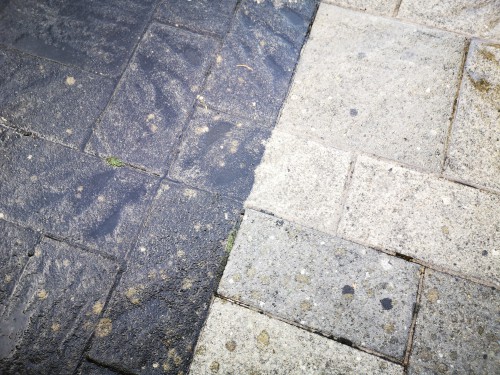
The bleach will get into the cracks and dramatically improve the look of your patio by killing things like weeds, moss, and algae. Make sure that you don’t have any runoff into areas where there is plant life because it will kill the plants. Also, note that it is not meant for man-made concrete slabs, but natural paving stones only. If you have artificial slabs, the bleach will fade the colour with time.
No products found.
Step 1 – Mixing the bleach
Mix a ratio of 5 parts warm water to 1 part bleach in a watering can. A watering can give you better pouring control compared to a bucket and reduce any runoff.
Step 2 – Applying the bleach mixture
Apply the mixture onto your slabs and begin brushing. As you brush, you should see a white foam layer building up.
Step 3 – Leave for 15 minutes
Once you are done scrubbing, let it sit for 15 minutes so it can break down the dirt and grime.
Step 4 – Start rinsing
After the 15 minute mark, rinse the area clean.
Cleaning Using A Pressure Washer
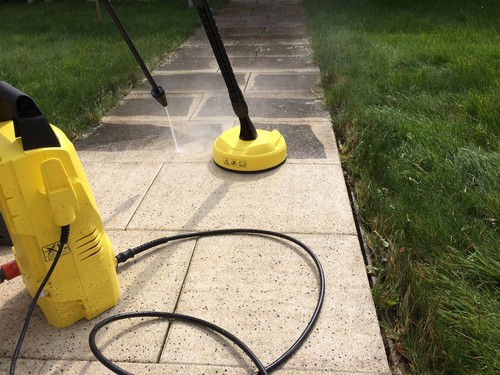
Step 1 – Clear the area that is to be cleaned
Remove any furniture, pots, and debris from the patio area. All loose material should be removed before you begin, and you can easily remove these using a leaf blower or a brush.
No products found.
Step 2 – Get the pressure washer set up
Connect the pressure washer to your hose and to your electricity supply. Make sure the hose has no kinks, and if you have a large hose wheel, unwind the entire thing before you start.
Step 3 – Add detergent to the pressure washer or spray it onto the patio separately
If you are using detergent (which we advise) mix it into the machine directly if it has a detergent tank, although sometimes they have a small hose to insert into a bottle of detergent. If the pressure washer does not take in detergent, spray it onto the patio separately with a garden sprayer and leave it for at least 10 minutes before you begin pressure washing.
Step 4 – Start cleaning the patio slabs
Start cleaning the patio with the pressure washer and change the variance of the spray as necessary to cover all areas of the patio. You can use a sweeping motion from left to right, and back to front for thorough coverage. When using a pressure washer, you want the nozzle to be set so that it sprays in a fan to cover the area quickly, not in a jet stream. You also want to hold it at 45° to wash the joints, not up and down. If you have stubborn stains try using the pencil jet spray attachment that most pressure washers come with instead of the fan lance.
The pressure washer is a great way to tackle the joints because these are where most of the sand and other debris ends up, and when it sits there, it becomes the perfect place for weeds.
When all is done, disconnect the pressure washer and empty it before storing it.
See our detailed guide on how to clean a patio with a pressure washer
If you use all three methods at regular intervals, soap and water regularly followed by bleach and water every few months and pressure washing once or twice per year, your patio will look pristine all the time.
Need a pressure washer? – Have a look at the top 6 best pressure washers for patio cleaning
Image credits – Shutterstock.com
Last update on 2026-09-08 / Affiliate links / Images from Amazon Product Advertising API